Aftersight NOWNovember 21, 2026
Anthropic Raised $93.5 Billion. Then the Market Fell
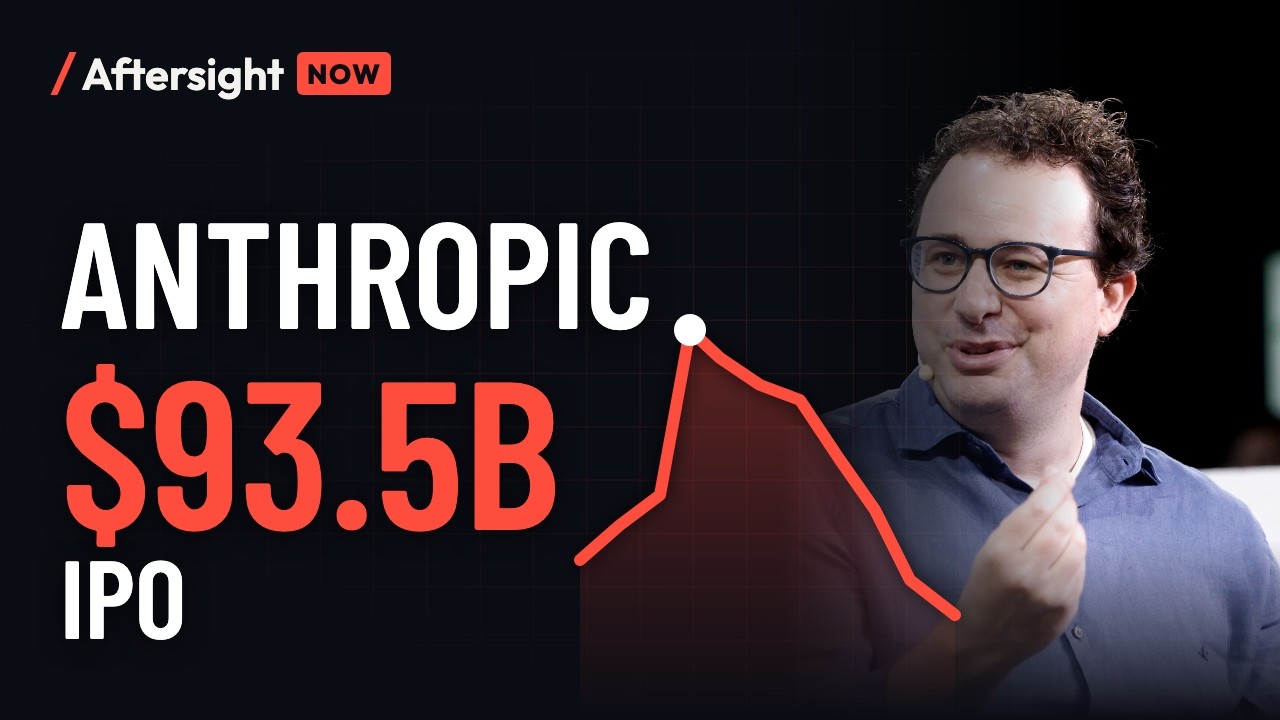
Thumbnail photo: TechCrunch, CC BY 2.0, via Wikimedia Commons.

The player loads from YouTube (privacy-enhanced mode) only when you press play. Until then this page makes no request to YouTube or Google.
Watch on YouTubeAnthropic went public on the Nasdaq on November 19, 2026. Including the extra shares the banks sold a day later, the IPO raised about $93.5 billion, more than any stock market debut before it. A day later, the S&P 500 and the Dow fell into a correction. What happened, who controls the company, what the $104 billion loss really means, and why the market fell. Facts and prices as of November 20, 2026.
- Series
- 02, Aftersight NOW
- Released
- November 21, 2026
- Subject
- Anthropic
Chapters
Sources
- SECProspectus (424B4)
- SECS-1/A
- AnthropicIPO close
- CNBCExtra shares
- CNBCSell-off and analysts
- CNBCMarketsNov 19
- CNBCSoftBank
- CNBCDay 2
- ReutersCorrection
- ReutersNvidia and the SEC
- BloombergOrders
- Yahoo FinanceDay 1
- SpaceXIPO close
- Gulf NewsAramco
- CBS News60 Minutes
- AnthropicClaude
- AnthropicSeries H
- NBC NewsAuthors
- Bloomberg Lawnews.bloomberglaw.com
- TechCrunchMusic publishers
- APPentagonvia PBS
- AnthropicStatement
- NPRCourt
- APAppeals courtvia PBS
- IEX.nlAEX
- "Down about 20%" is our own calculation ($111.50 to about $89).
Read the transcript
Transcript
What happened
Aftersight NOW. What happened, and why it matters. As of November 20, 2026.
On Thursday, November 19, around midday in New York, Anthropic's shares started trading on the Nasdaq.
The first trade was at $111.50. The day before, the price had been set at $83.
With the extra shares the banks sold a day later, the IPO brought in about $93 billion. No company has ever raised more in a stock market debut.
On Friday the S&P 500 fell for the seventh day in a row, and both the S&P 500 and the Dow ended the week in a correction.
Anthropic went public at a value of more than a trillion dollars, at a time when investors already had doubts about the money being spent on AI.
The deal
Anthropic had expected a price of $70 to $78 a share. Orders reportedly came in at about six times the shares on offer. It raised the price to $83 and sold 980 million shares, more than it had planned.
With the extra shares its banks sold on November 20, the total came to about $93.5 billion. About $91.5 billion went to Anthropic and the rest to its seven founders, who sold some of their own shares.
The previous record was set in June by SpaceX, which was valued higher at its debut.
At the same time, Google and Nvidia each bought $10 billion worth of shares directly from the company, and other chip and cloud companies bought smaller amounts. Several of these buyers also supply the chips and computing power Anthropic runs on. Their new shares are not under the IPO lock-up, but securities rules still limit when they can be resold.
At the end of the first day the share price was $97.17, which valued Anthropic at about $1.3 trillion.
Who is in control
Ordinary shareholders get very little say in the company.
The seven co-founders control a company that holds one special share. That share has 50.1 percent of all the votes, and no financial rights.
A separate body, the Long-Term Benefit Trust, can elect and remove a majority of the board.
Amazon owns about 14 percent of all shares and Google about 13 percent, but their shares have no votes.
Anthropic is a public benefit corporation. Its stated purpose is "the responsible development and maintenance of advanced AI for the long-term benefit of humanity", and its board has to balance that with shareholders' financial interests and the interests of people it affects.
The prospectus warns that this structure may effectively eliminate ordinary shareholders' ability to influence important decisions.
The numbers
Anthropic's revenue was $41 million in 2023 and $4.6 billion in 2025. In the first nine months of 2026 it was $33 billion.
In those same nine months it reported a net loss of $104 billion.
Most of that is an accounting loss, not cash that was spent. Anthropic has borrowed through notes that convert into shares, including notes held by Amazon. As the company's value rose, so did the value of those notes and some similar instruments, and that increase is booked as a loss: $94 billion. Other financing arrangements added about $10 billion. The operating loss was $1.3 billion.
Anthropic has made a loss every year since it was founded. The prospectus says it expects losses to continue, and that it may not become or stay profitable.
It has also signed purchase and lease commitments of about $900 billion, almost all for computing power and infrastructure. About half of that falls before the end of 2030, and the rest runs to 2045.
How it got here
Anthropic was founded in 2021. Dario Amodei, who oversaw research at OpenAI, left with six colleagues, among them his sister Daniela. The founders say they wanted to take a different approach to developing safer AI.
Its first public model, Claude, came out in March 2023. Amazon and Google invested billions, and in May investors valued the company at $965 billion.
Authors sued Anthropic over pirated copies of their books that it had used to train its AI. A judge ruled that training on books was fair use but downloading pirated copies was not, and Anthropic agreed to pay about $1.5 billion to settle. Other lawsuits, including from music publishers, are still running.
In February, the Pentagon demanded what the Associated Press called unrestricted military use of Anthropic's AI. Anthropic kept two limits: no mass surveillance of Americans and no fully autonomous weapons. President Trump ordered federal agencies to stop using its technology, and the Pentagon labeled the company a supply chain risk. Another federal court later ruled largely in Anthropic's favor, an appeals court in Washington upheld a supply chain designation, and the dispute is not over.
The market
By the day before the IPO, the S&P 500 had already fallen five days in a row.
On Thursday stocks opened higher and then turned. CNBC reported that they fell to their lows of the day almost immediately after Anthropic began trading. The S&P 500 closed down 2 percent.
On Friday the S&P 500 fell another 3.7 percent, and the Nasdaq more than five. The S&P 500 and the Dow closed more than 10 percent below their record highs, the usual definition of a correction.
News reports named several causes for the sell-off. Reuters wrote that Anthropic's debut was "exacerbating worries about the AI trade".
Nvidia fell about 14 percent on Friday. During the session, Reuters reported, citing two unnamed sources, that the SEC is looking at possible accounting issues. Nvidia had not commented, and an investigation is not a finding of wrongdoing.
Markets also expect the Federal Reserve to raise interest rates in December, and investors are asking when the money spent on AI will pay off.
Markets in Asia and Europe fell too. SoftBank lost 14.5 percent in Tokyo, and ASML more than 9 percent in Amsterdam.
Anthropic's own shares fell between 8 and 9 percent on Friday, to roughly $89. That is still above the $83 IPO price, which they came close to during the day. Anyone who bought at the first trade, at $111.50, was down about 20 percent.
Bubble or not
It is too early to say whether this is a temporary drop or the end of the AI rally, and analysts disagree.
Avery Marquez of Renaissance Capital called Anthropic "very richly valued". Brett Winton of ARK Invest said he still sees "a lot of upside".
A year ago on 60 Minutes, Anderson Cooper said nobody had voted on the changes AI is bringing. Amodei answered that he was "deeply uncomfortable with these decisions being made by a few companies, by a few people", and that this is one reason he argues for regulation.
Anthropic's seven founders now have majority voting control of a listed company that reports its results every quarter. How it will combine its stated purpose with what shareholders expect is an open question. Would you like a longer Aftersight documentary on Anthropic's history? Let us know in the comments.
Same series
More from Aftersight NOW
Subscribe
New films,
on YouTube.
Subscribe on YouTube and you will see new films when they come out. Each video lists its sources in the description.
Subscribe on YouTube